
FYC - BEST JAZZ VOCAL ALBUM
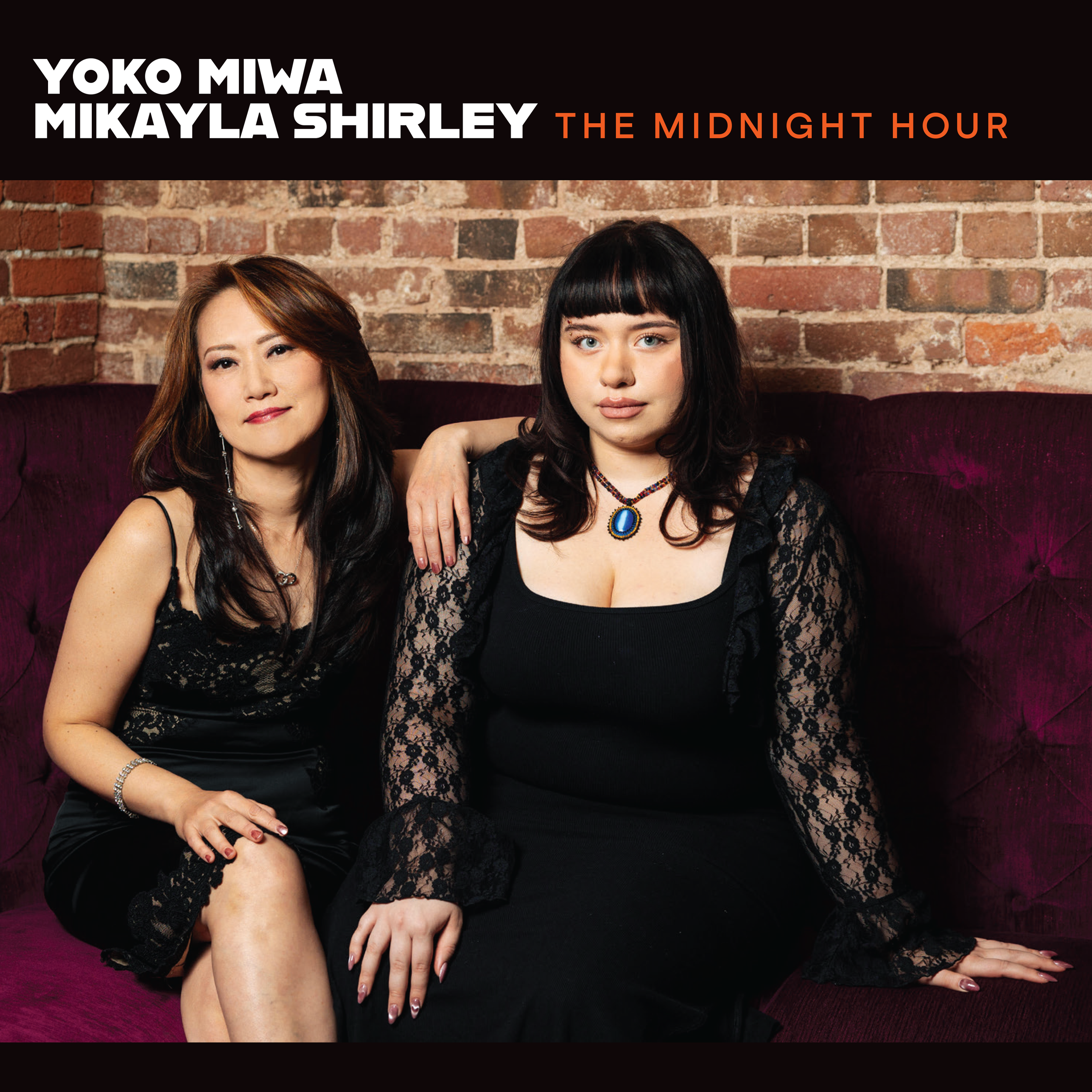
YOKO MIWA / MIKAYLA SHIRLEY The Midnight Hour | Mikayla Shirley Vocals Yoko Miwa Piano
Album Produced by Yoko Miwa and Scott Goulding
Cupcakes & Muffins CM 2609 (Worldwide Album Release) August 28th, 2026
yokomiwa.com | mikaylashirley.com | press: dlmediamusic.com | radio: groovmarketing.com
physical distribution: [north america] spinneymedia.com [r.o.w.] propermusicgroup.com

FEATURED PRESS
Downbeat Feature: The Eternal Light of Standards (October 2026)
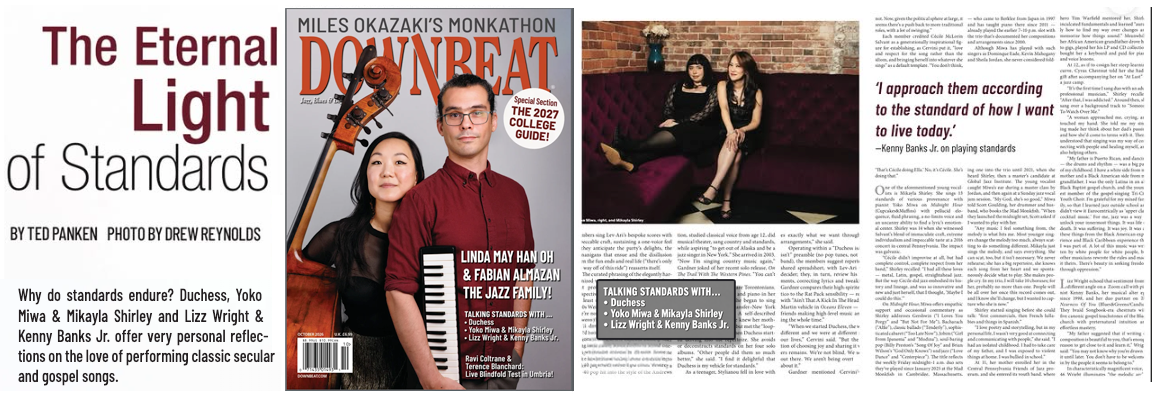
Article in Downbeat online
“These two female artists bring the best of themselves and their talent to the studio, pleasing the listener with familiar songs that sound brand new. The simplicity of just two artists performing calls vivid attention to how crisp and enunciated every word of the lyric is when Mikayla Shirley sings her songs. It also spotlights the sensitivity and the beauty Yoko Miwa brings to her solo piano concert and accompaniment.” / MAKING A SCENE
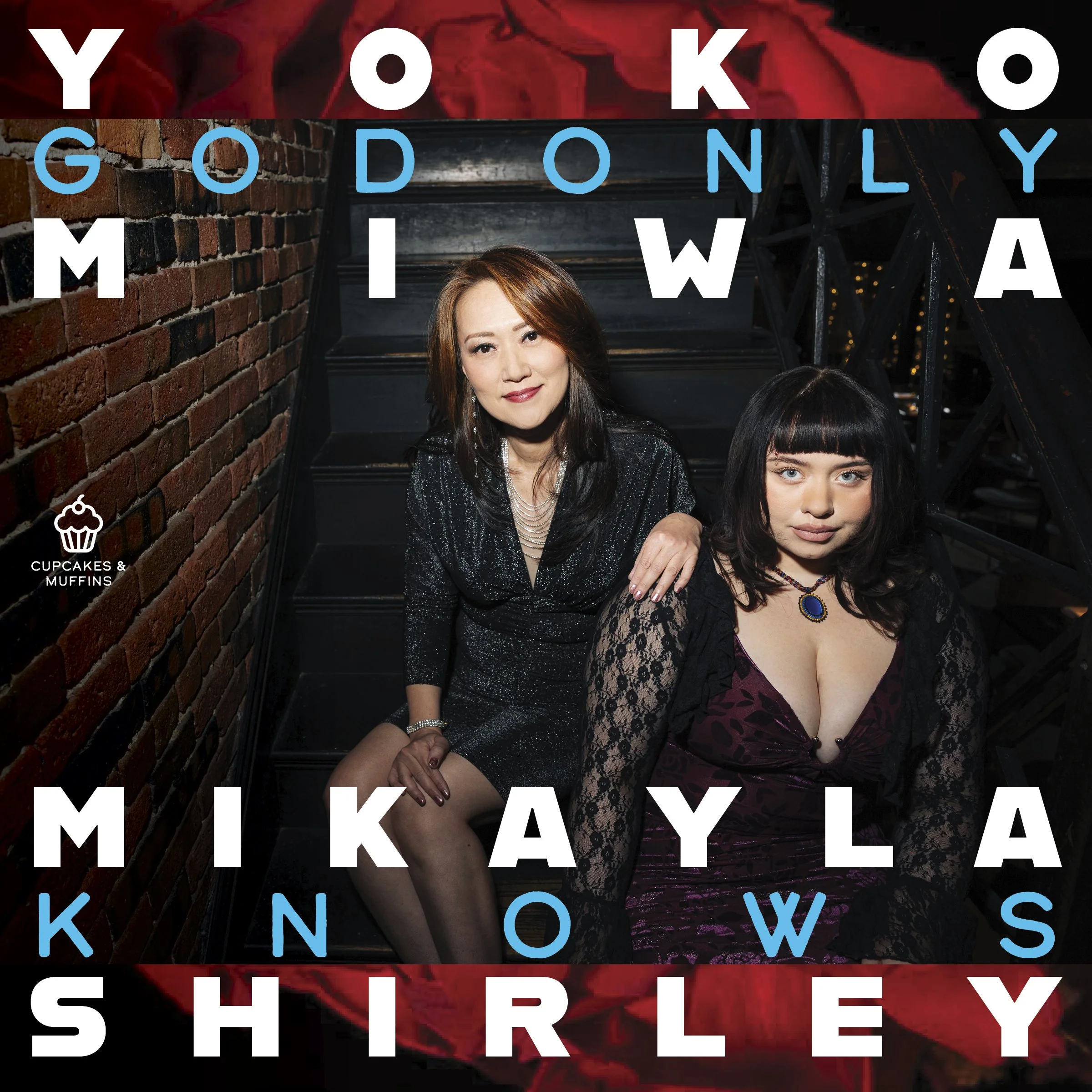
“Great jazz is rooted in conversation, and the collaboration between the Yoko Miwa Trio and guest vocalist Mikayla Shirley at Dizzy’s Club was a conversation well worth listening to…beginning with a lovely reimagining of the Beach Boys classic “God Only Knows.” The minimalist piano-and-vocal setting put Shirley’s beautiful voice front and center. Her pitch-perfect phrasing, nuanced delivery, and emotional vulnerability allowed every word and every note to resonate.” / NITELIFE EXCHANGE
“On their luscious new album The Midnight Hour, Boston-based, internationally renowned pianist and composer Yoko Miwa and the excellent young singer Mikayla Shirley create a warm, pensive atmosphere that befits the album’s title. The duo format might be a spare pairing, but the interplay of Miwa’s sensitive accompaniment and Shirley’s honeyed vocals turns this 13-track set of standards and not-so-standards into an engaging late-night conversation you want to keep listening to.” / THE ARTS FUSE
“Mikayla Shirley’s voice is beautiful, controlled and technically assured… her pitch is secure, her range allows her to move comfortably through demanding material, and there is a sophistication in her phrasing that reflects serious attention to the great tradition of jazz singing. Yoko Miwa is an accomplished pianist whose playing is so complete, so harmonically informed… There are moments of genuine beauty. The sound is intimate enough to place the listener close to the musicians, capturing the details of Shirley’s voice and Miwa’s piano with considerable clarity. The sonic intimacy works.” / PARIS-MOVE
“Miwa, an exceptional jazz pianist, proves to be a sensitive accompanist, complementing Shirley’s impressive vocals. Shirley has a superb jazz feeling and reads lyrics with deep understanding.” / JERSEY JAZZ
“The repertoire travels from jazz standards and Broadway songs to Brazilian music, classic pop, and contemporary songwriting. But rather than being defined by genre, the project is united by something much simpler—and much more powerful: A great song.” / NEON JAZZ
“This is very much a late-night album; pared back with all the focus on melody and lyrics and two artists in sync with each other…Shirley sings ‘Garota De Ipanema (The Girl From Ipanema)’ in Portuguese… [they] alter the phrasing while emphasizing the song’s rhythmic ebb and flow. Miwa at the piano, when combined with Shirley’s delivery, makes for an engaging listen. ‘Modinha’...is also sung in Portuguese by Shirley, and it sounds very much as if she has a personal connection with the lyrics—she both understands and feels the words that she is singing—and the piano accompaniment fits perfectly.” / SIMPLY JAZZ TALK
“...After listening back to the sessions, Miwa, Shirley, and co-producer Scott Goulding jokingly discussed calling the project Oops…All Ballads. The title never stuck, but the observation wasn’t entirely wrong. Many of the selections unfold at a reflective pace. Yet these are hardly your parents’ idea of a ballad album. Rather than dwelling in nostalgia, the performances uncover fresh emotional terrain within songs that continue to reveal new meaning over time.’ / EXCLUSIVE MAGAZINE
“Great jazz is rooted in conversation, and the collaboration between the Yoko Miwa Trio and guest vocalist Mikayla Shirley at Dizzy’s Club was a conversation well worth listening to…beginning with a lovely reimagining of the Beach Boys classic “God Only Knows.” The minimalist piano-and-vocal setting put Shirley’s beautiful voice front and center. Her pitch-perfect phrasing, nuanced delivery, and emotional vulnerability allowed every word and every note to resonate.” / NITELIFE EXCHANGE
“What classic influences echoed in Shirley’s voice? The artist, barely old enough to drink from the martini glass sequestered stage right, conjured up a seance of spirits. The athleticism of Ella Fitzgerald. The frank address of Billie Holiday. The elastic vibrato of Sarah Vaughan. The young artist, decked out in evening dress, claimed a lineage with a kind of old-school jazz vocalist that is nearly nonexistent these days. The kind of vocalist who leans into the numbers, transporting the audience into a space of romance and elegance, whether they’re playing in front of three or three hundred people.” / HUMPDAY NEWS
“[Miwa] keeps her harmony elegantly consonant, and her improvised lines tunefully logical; she also plays with such a big, classically-informed sound that even the rough bits in her music somehow sound … pretty. Not that there’s anything wrong with pretty, but it’s not a quality that the jazz intelligentsia much values. Ahmad Jamal’s great trio recordings were sniffed at [and] some of Oscar Peterson’s work was dismissed for being too beautiful; [here] beauty does not necessarily equate with blandness.” / JAZZTIMES
The Midnight Hour / on Spotify / on Apple Music
Magic Is Revealed In The Midnight Hour
For some, the magic hour arrives at dusk, when the setting sun casts long shadows and transforms the ordinary into something mysterious and beautiful. Photographers especially love that fleeting moment when the light changes and familiar landscapes reveal new dimensions.
But there is another magic hour.
Right after midnight, at the threshold of a new day, anything seems possible. Nothing has been decided yet. The past recedes into yesterday, if you believe in yesterdays. If you’re still awake, the hours between midnight and dawn can feel charged with possibility—filled with love, joy, grief, gratitude, anticipation, longing, and all the honest emotions that great songwriters create within their work.
It is from that place that The Midnight Hour takes its name.
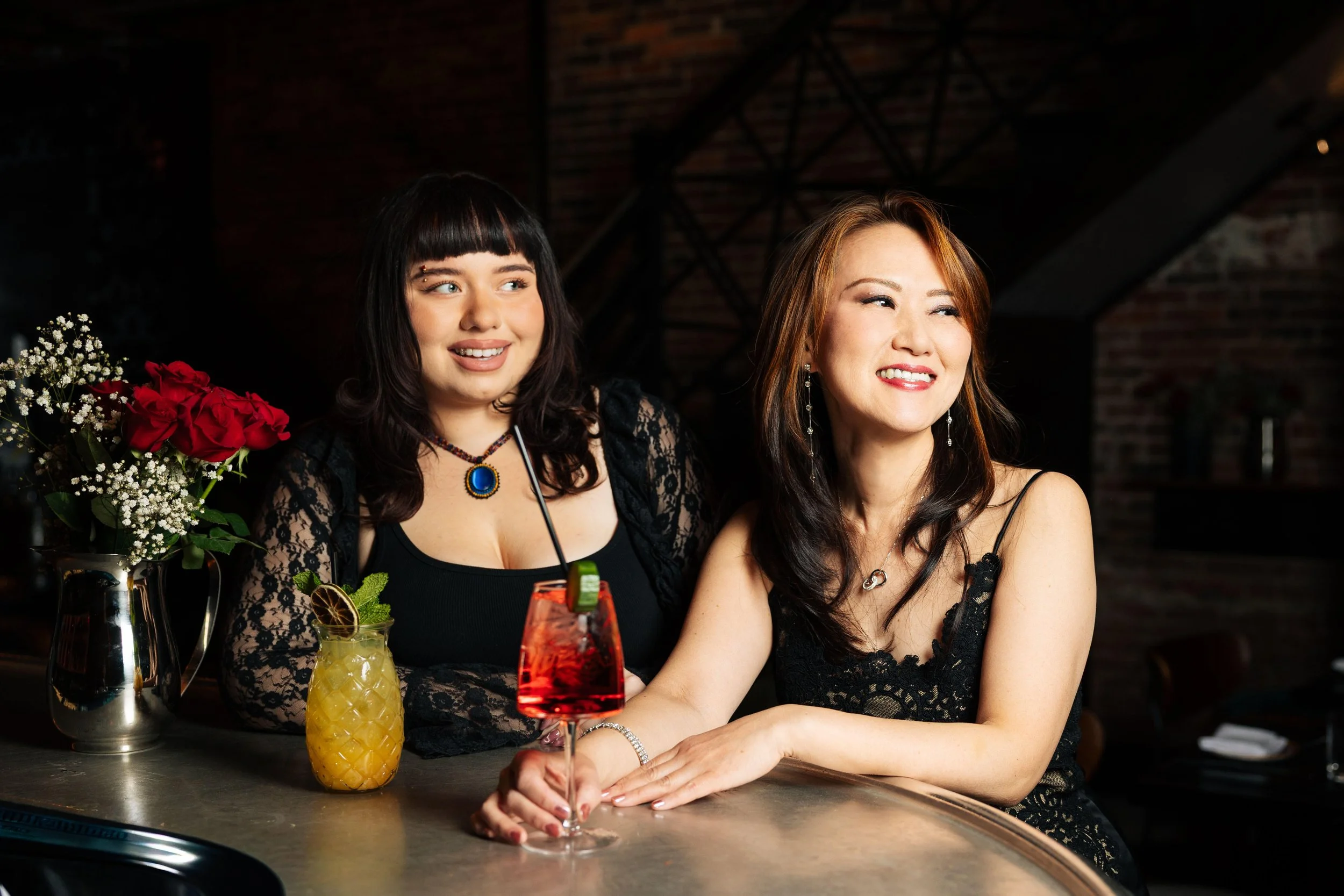
After midnight on Friday nights at The Mad Monkfish in Cambridge, Massachusetts, vocalist Mikayla Shirley joins pianist Yoko Miwa for an intimate duo set that has quietly become one of the Boston jazz scene’s hidden treasures. If you’ve been fortunate enough to catch one of these late-night performances, you’ve witnessed two musicians exploring an eclectic repertoire that moves effortlessly between jazz standards, Broadway songs, Brazilian music, classic pop, and contemporary songwriting. What unites the material is not genre, but a shared belief in the power of a great song.
Yoko Miwa and Mikayla Shirley began performing together during Monkfish’s Midnight Sessions in 2025, and those evenings became the foundation of their musical collaboration. There was never really a more fitting title for their debut recording than The Midnight Hour, since the album captures both the atmosphere and the spirit of those late-night performances.
At one point, however, the album nearly received a very different title.
After listening back to the sessions, Miwa, Shirley, and co-producer Scott Goulding jokingly discussed calling the project Oops…All Ballads. The title never stuck, but the observation wasn’t entirely wrong. Many of the selections unfold at a reflective pace. Yet these are hardly your parents’ idea of a ballad album. Rather than dwelling in nostalgia, the performances uncover fresh emotional terrain within songs that continue to reveal new meaning over time.
As Shirley explains: “I’m always looking for something honest inside a song—something that feels real enough that I can live inside it for a few minutes and hopefully invite someone else into that experience with me. The songs that stay with me are usually the ones that keep revealing new things over time. They’re the songs you return to year after year and somehow find something new waiting there.”
When performing live, the songs unraveled without pretension, and, interestingly, without rehearsal, as Yoko notes: "Mikayla and I have never rehearsed—not once. Everything we've played together has either happened live on stage or in the studio during the recording of this album. While we've been performing this repertoire for some time, we don't really work from fixed arrangements. On a gig, we spontaneously decide what to play in the moment, guided by the emotional arc of the set—considering factors like mood, tempo, key, and lyrical content. Occasionally, a song will evolve naturally to serve the needs of a particular performance.
This followed them into Q Division, where they recorded the album: “The recording process followed the same philosophy.” Yoko continued, “Although we came into the studio with a list of songs we hoped to record, we hadn't decided exactly which songs we would do or in what order. As a result, each performance was shaped by what had already been played and what lay ahead, allowing the arrangements to emerge organically rather than from preconceived ideas. This gave us that sense of immediacy, spontaneity, and discovery that reflects the way we perform together.”
That philosophy is at the heart of The Midnight Hour.
For decades, jazz singers primarily drew from the Great American Songbook—the work of Gershwin, Porter, Berlin, Arlen, Rodgers and Hart, and other legendary composers whose songs became the foundation of vocal jazz. Those songs remain as vital as ever, but a younger generation of artists has begun expanding the boundaries of what belongs in the songbook tradition.
Artists such as Nicole Zuraitis, Laufey, RAYE, and Cécile McLorin Salvant have helped broaden the conversation, embracing material from jazz, pop, theater, folk, Brazilian music, and contemporary songwriting. Rather than defining a repertoire by genre, they are helping create what might be called a Modern Songbook—a collection of enduring songs that deserve continued interpretation regardless of where they originated. Recently, Nicole Zuraitis even founded the Modern Songbook Society to champion that evolving vision.
The selections from The Midnight Hour hew to that eclecticism. The album moves comfortably between Burt Bacharach and Hal David’s “Alfie,” Brazilian repertoire, Broadway material, jazz standards, and the Beach Boys’ “God Only Knows.” What unites these songs is not style but emotional depth. The question Shirley seems to ask of every song is not whether it belongs to a particular tradition, but whether it contains something true.
In that sense, The Midnight Hour is less a jazz album than a collection of remarkable songs interpreted by two musicians committed to finding the emotional center of each one.
From the beginning, Miwa heard something distinctive in Shirley’s voice—not simply its beauty, but its ability to inhabit a lyric. The project also offered Miwa an opportunity to reconnect with an earlier chapter of her musical life. Before becoming known internationally as a pianist, composer, and bandleader, she spent years accompanying singers in Japan and later served as the personal accompanist and pianist for the late jazz vocalist Kevin Mahogany.
Listening to Miwa describe the sessions, one theme emerges again and again: surprise. Not the surprise of novelty, but the deeper surprise that occurs when a trusted song suddenly reveals something you never knew was there.
"First and foremost,” Yoko explains, “Mikayla possesses one of the most beautiful vocal tones I’ve ever heard. That alone would be remarkable, but she also has a deep understanding of dynamics, rhythm, and timbre, along with an extraordinary ability to communicate the emotional essence of a song. Many of the songs Mikayla sings are standards I’ve played countless times over the years—songs that have been interpreted by generations of jazz musicians and can be challenging to approach from a fresh perspective. What makes Mikayla unique is her ability to make me hear those songs differently, sometimes as if I’m hearing the lyrics for the very first time.
The qualities Miwa heard in performance became even more apparent when the sessions started. What followed was not created with endless refinement, but on spontaneity and trust.
“This recording was Mikayla’s first professional studio session, yet you would never have known it. She was consistently delivering masterful performances on the first take. After a few songs, Scott (Goulding) came into the piano booth and gave me a gentle reminder: I needed to be prepared for the possibility that the first take would be the one we kept. Mikayla wasn’t relying on multiple takes to find the music, which turned the session into sharper focus for me, committing to every note we shared together. Every minute was so fresh, alive, and immediate, and as I teach my students, especially in a duo setting, there is a wonderfulness to deep listening and being fully present.”
“Brian Wilson’s ‘God Only Knows’ is a perfect example. We never rehearsed that one; I asked her to learn it, and before we started to record, we only discussed the musical shape and character we wanted it to have. We recorded three takes, and the second one is on the album—not because it was the most polished, but because it contains a magical improvised ending vamp that just flowed spontaneously and could never have been recreated, even if we had tried. Now we play the song every night as if it is something new and exciting.”
When the two talk about the process of recording The Midnight Hour, you understand this is not a traditional singer-and-accompanist recording.
Miwa and Shirley function as equal musical partners. Miwa is not sitting quietly behind the vocalist providing harmonic support; her playing shapes the emotional direction of every performance. Her improvisations illuminate hidden corners of the songs while Shirley responds with equal sensitivity and imagination. Likewise, Shirley’s voice finds new colors and dimensions through Miwa’s accompaniment. The result is a musical conversation in which each artist elevates the other.
The album was recorded at Boston’s renowned Q Division Studios, whose acoustically balanced rooms captured every nuance of the performances with remarkable clarity. The intimate sound places the listener directly inside the dialogue between voice and piano, preserving not only the music itself but also the spontaneity and emotional honesty that characterize the duo’s live performances.
Scott Goulding elaborated: "I first recorded at the original Q Division Studios years ago with John Butcher and hadn't been back since the studio relocated. More recently, Yoko and I recorded a track there with a visiting artist from China, and it reminded me why Q Division has such a legendary reputation. Yoko loved the piano, and I loved everything about the space. Because so much of their music emerges spontaneously, the studio became more than just a place to record—it became an active part of the creative process.
“What makes Q Division special is its ability to capture the feeling of musicians creating together in the moment. Its beautiful live rooms, exceptional acoustics, and seamless combination of vintage analog and modern digital technology made it the perfect setting for Yoko and Mikayla's recording. It is important to note that we achieved Mikayla’s vocal sound using their vintage Neumann U47. Chuck Hargreaves, our engineer, told me the studio acquired it back in the late 80's when they were still on Albany St. in the South End (Q Division 1.0!). He says it iis one of the top 5 most loved mics in the whole building, and been on countless recordings.”
There is a long history behind this collaboration. Miwa was a favorite pianist of the late jazz legend Sheila Jordan and Yoko accompanied vocalists extensively during her years in Japan and later worked closely with Kevin Mahogany. Today she serves as a Professor in the Piano Department at Berklee College of Music, where Shirley was pursuing graduate studies through Berklee’s Global Jazz Institute. Yet it was not in a classroom where their partnership began. It began at Monkfish, within Boston’s thriving jazz community, where a late-night musical encounter gradually evolved into something neither musician could have anticipated.
The album is ultimately a conversation—between voice and piano, between tradition and discovery, between songs and the listeners who continue to find themselves inside them. These are songs that have endured because they still have something to say.
As one early listener remarked after hearing The Midnight Hour: “This is just what the world needs right now. It’s a return to the song, the lyric, the melody. No pyrotechnics. No fancy twists and turns. Just two masters of this music serving the song in a beautifully selfless way.”
YOKO MIWA piano MIKAYLA SHIRLEY voice
Recorded and mixed by Chuck Hargreaves at Q Division Recording Studios in Cambridge, MA, USA
Mastered by Toby Mountain at Northeastern Digital
Produced by Yoko Miwa and Scott Goulding
Photography by Caroline Alden
Album Tracks
Alfie (05:35) Hal David, Burt Bacharach
On the Street Where You Live (04:38) Alan Jay Lerner, Frederick Lowe
God Only Knows (04:38) Brian Wilson, Tony Asher
Garota de Ipanema - Girl from Ipanema (03:52) Vinicius De Moraes, Antonio Carlos Jobim
I Loves You, Porgy (06:17) Du Bose Heyward, Ira Gershwin, George Gershwin
I Didn't Know What Time It Was (03:42) Lorenz Hart, Richard Rodgers
Too Late Now (05:26) Alan Jay Lerner, Burton Lane
But Not for Me (04:08) Ira Gershwin, George Gershwin
Tenderly (04:35) Jack Lawrence, Walter Gross
Love Dance (06:16) Ivan Lins, Gilson Peranzatta, Paul Williams
Centerpiece (03:34) Jon Hendricks, Harry “Sweets” Edison
Modinha (04:15) Vinicius De Moraes, Antonio Carlos Jobim
Song of Joy (05:56) Reginald L Boutté, Billy Preston
About Yoko Miwa
Yoko Miwa is an internationally acclaimed jazz pianist, composer, educator, and bandleader whose powerful combination of virtuosity, lyricism, and swing has made her one of the most respected voices in contemporary jazz. Born in Kobe, Japan, Miwa began as a classical pianist before discovering jazz and eventually earning a full scholarship to Berklee College of Music, where she later joined the faculty and became one of the institution’s most popular piano professors.
Leading the acclaimed Yoko Miwa Trio, she has performed at major venues including New York’s Blue Note Jazz Club, Birdland, and Lincoln Center, and has appeared with artists such as Arturo Sandoval, Esperanza Spalding, Sheila Jordan, and Kevin Mahogany. She was named Jazz Artist of the Year at the 2019 Boston Music Awards and is a Yamaha Artist.
Her recordings include In the Mist of Time (2000), Fadeless Flower (2002), Canopy of Stars (2004), The Day We Said Goodbye (2006 and 2026), Live at Scullers (2011), Act Naturally (2012), Pathways (2017), Keep Talkin’ (2019), and Songs of Joy (2021), which reached No. 1 on the national jazz radio charts.
In 2026, rising vocalist Mikayla Shirley appears alongside Yoko on The Midnight Hour, a forthcoming release on the Cupcakes & Muffins label. Reflecting on the collaboration, Miwa notes, “Mikayla has a rare ability to tell a story through a song. She brings honesty, warmth, and a natural sense of swing to everything she sings. Working with her on The Midnight Hour reminded me of the classic singer-pianist recordings that first drew me to jazz—the kind of performances where every note serves the lyric and every lyric serves the emotion of the song.” The album showcases Shirley’s emerging artistry while highlighting the musical chemistry the two have developed through years of performing together.
Yoko, praised by the late Ahmad Jamal and admired for her ability to combine dazzling technique with emotional depth, continues to captivate audiences worldwide while mentoring the next generation of jazz musicians.
About Mikayla Shirley
Mikayla Shirley is a rising jazz vocalist, songwriter, and performer whose warm tone, expressive phrasing, and gift for storytelling have quickly made her a standout voice on the Boston jazz scene. A student at the Berklee Global Jazz Institute, Shirley has earned recognition for performances that blend the elegance of classic jazz singing with a fresh, contemporary sensibility. Critics have praised her ability to draw audiences into each song, noting a vocal style that reflects the influence of jazz greats while remaining distinctly her own.
A frequent collaborator with acclaimed pianist Yoko Miwa, Shirley has appeared with the Yoko Miwa Trio at leading venues throughout New England and beyond, developing a musical partnership rooted in lyrical interpretation, swing, and emotional connection. Their performances together have become a highlight of Miwa’s recent concert appearances, including engagements at Regattabar and other prominent jazz venues.
In 2026, Shirley and Miwa will release The Midnight Hour on the Cupcakes & Muffins label, an intimate collaboration that showcases their shared love of timeless melodies, late-night jazz atmospheres, and expressive musical storytelling. The recording captures the chemistry that has made their live performances so compelling, introducing Shirley as an exciting new voice while highlighting the musical rapport she shares with one of jazz’s most celebrated pianists.
About Cupcakes & Muffins
Cupcakes & Muffins is an international independent record label, co-owned by music industry veterans David Greenberg and Del Bartle. Greenberg previously worked as a producer/product manager for Rykodisc, overseeing projects involving artists such as Yoko Ono, Ringo Starr, and Frank Zappa, and later serving as Director of Marketing for a few boutique international music booking agencies. Bartle, a longtime member of The Godfathers and The Sid Presley Experience, and former Rykodiscer in the label’s UK/Europe office, brings to the label decades of experience as a guitarist, arranger, songwriter, and producer.
Cupcakes and Muffins specializes in rare reissues, overlooked rock and jazz recordings, roots music, and artist-driven collaborative projects. Its catalog includes releases by The Mercy Brothers, Yoko Miwa Trio, tribute band Pink Houses, The Mothers of Exile, DJ Trotsky, Iranian national protest singer Sahand, and archival projects such as Freak Street, tunes recorded by The Joint, which was Rick Davies’ pre-Supertramp proto-prog group, The Joint and soundtrack compilations from the sexy and outrageous New German Cinema movement of the 1960s. Soon, the label will release a series of environmental recordings from the acclaimed Nature Sounds Preservationist, Peter Acker and the iconic album Transparent Music by slide guitarist, BJ Cole, which has been noted as the keystone release for anyone delving into the now-called super successful genre, Ambient Country.
Cupcakes & Muffins combines deep catalog research with modern independent production, digital strategy, and physical design, focusing on music that bridges lost musical history with contemporary creative work across jazz, Americana, R&B, folk, and rock ’n’ roll.
But ultimately, Cupcakes & Muffins is a music label dedicated to releasing treats, sweet and savory in every bite. Sometimes, they bite back.